
I arrived in Spain: first steps and essential documents
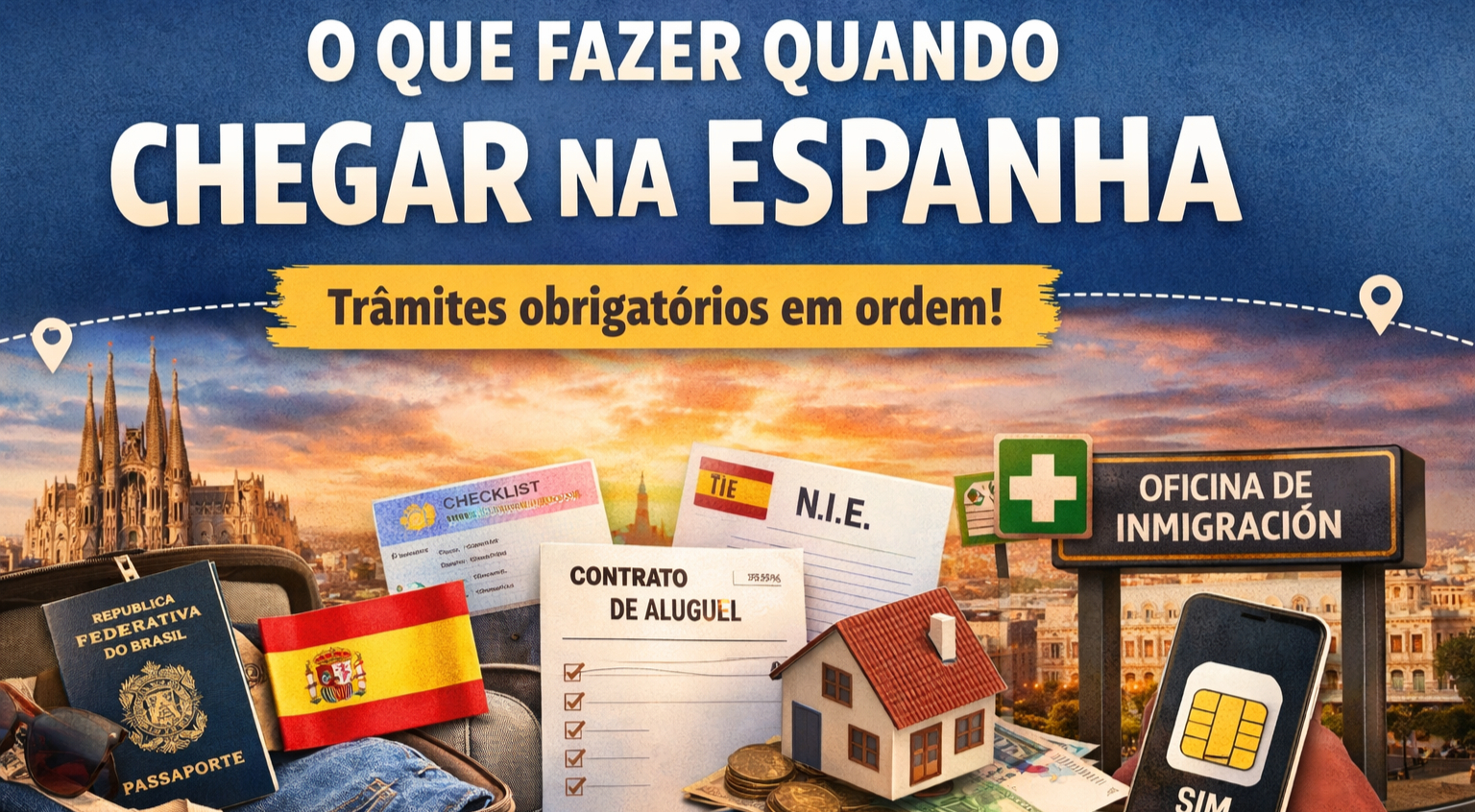
Your first days in Spain tend to be smoother when there is a practical order for the main steps. Instead of trying to solve everything at once, it helps to prioritize address, identification, banking and document organization.
1. Organize your address and empadronamiento
Empadronamiento is one of the most important records at the beginning. It helps prove where you live and often appears in later stages such as healthcare, schooling and some administrative procedures.
2. Understand whether your document is an NIE, TIE or CUE
Not every newcomer needs the same document. The answer depends on nationality, type of stay and the migration route you are following. Reading this correctly saves time and avoids the wrong appointments.
3. Banking and phone service make the rest easier
A Spanish bank account and phone number usually help with rent, payments, registrations and app verification. In some cases, a passport helps you get started; in others, the NIE or proof of address carries more weight.
4. Keep your proof from day one
Receipts, contracts, messages, proof of address and administrative records are helpful in everyday life and can also matter in later procedures.
5. Keep a simple checklist nearby
- Passport and personal documents
- Proof of address or accommodation
- Empadronamiento, when relevant
- Clarity on the correct immigration document
- Banking, phone setup and digital copies of key records
When arrival is organized step by step, adaptation becomes clearer and daily life starts moving with much less rework.
Informational content. Every immigration case depends on goals, documents, history and timing.
Want to understand which path makes the most sense for your profile?
Talk to Ruta Hispánica to align visas, residence, CAP, studies, regularization or first steps in Spain with more confidence.
Book a WhatsApp consultation